BaZi Articles
Explore BaZi through the Four Pillars, Day Master, Five Elements balance, and Supportive Elements.
Part of Tao & Form Eastern Wisdom, connecting Yin-Yang, the Five Elements, BaZi, Zi Wei Dou Shu, symbolic forms, and classical Eastern philosophy with modern life.

What Is BaZi?
BaZi, or the “Eight Characters,” is a traditional Chinese birth-time analysis system based on the year, month, day, and hour of birth. This article explains what BaZi means, how the Four Pillars are formed, why the Day Master matters, and how the Five Elements shape BaZi interpretation.

What Is a BaZi Chart?
A BaZi chart is the table formed from your year, month, day, and hour of birth. This article explains how the Four Pillars, Heavenly Stems, Earthly Branches, Day Master, Hidden Stems, and Five Elements work together to form your personal energetic blueprint.

Why Birth Time and True Solar Time Matter in BaZi
Birth time determines the Hour Pillar in a BaZi chart, while birthplace is needed to adjust clock time into true solar time. This article explains why accurate birth time and birth city matter, how true solar time can change the Hour Pillar, and why Tao & Form uses birth location to improve chart accuracy.

The Five Elements in BaZi: How Wood, Fire, Earth, Metal, and Water Form a Chart
The Five Elements are the basic language of a BaZi chart. This article explains how Wood, Fire, Earth, Metal, and Water enter a chart through Heavenly Stems, Earthly Branches, and Hidden Stems, and how Five Element relationships shape Day Master strength, chart pattern, and Supportive Elements.

What Is the Day Master in BaZi?
The Day Master is the Heavenly Stem of your Day Pillar and the central reference point of a BaZi chart. This article explains why the Day Master represents “you yourself,” how it differs from the Chinese zodiac, how it relates to Tao & Form’s Core Element, and why Day Master strength is essential for identifying supportive elements.

What Are Supportive Elements in BaZi?
Supportive Elements are the Five Element directions that help a BaZi chart function with better balance, flow, and support. This article explains why Supportive Elements are not simply “missing elements,” how they depend on the Day Master, strength, flow, and chart pattern, and how Tao & Form uses them to guide jewelry recommendations.

What Does Your BaZi Pattern Represent?
A BaZi Pattern describes the overall structure and energetic direction of a chart. This article explains why pattern is more than a simple strong-or-weak label, how different patterns show the Day Master’s position within the chart, and how pattern influences the choice of Supportive Elements.

How to Choose Jewelry Based on Your BaZi Chart
Tao & Form recommends jewelry by reading the full BaZi chart, not by zodiac animal or missing-element logic. This article explains the complete path from Day Master and chart pattern to Supportive Elements, then shows how those elements can be mapped to colors, materials, symbols, and personalized jewelry recommendations.

BaZi vs. Western Astrology: What Is the Difference?
BaZi and Western astrology both begin with birth information, but they use very different symbolic systems. This article compares planets, zodiac signs, and houses with Heavenly Stems, Earthly Branches, Four Pillars, and Five Elements, and explains the precise solar-longitude relationship between Sun signs and BaZi Month Branches.

BaZi vs. Chinese Zodiac: What Is the Difference?
BaZi is not the same as the Chinese zodiac. This article explains why the zodiac animal represents only the Earthly Branch of the birth year, while BaZi uses the full Four Pillars — year, month, day, and hour — to analyze the Day Master, Five Element relationships, chart pattern, and Supportive Elements.

BaZi vs. Zi Wei Dou Shu: What Is the Difference?
BaZi and Zi Wei Dou Shu both belong to Chinese destiny analysis, but they use different symbolic systems and chart structures. This article explains how BaZi works through Four Pillars, Day Master, Five Elements, chart pattern, and Supportive Elements, while Zi Wei Dou Shu uses stars, twelve palaces, and life-domain interpretation.

What Are the Ten Gods in BaZi?
The Ten Gods in BaZi are not deities, but ten relationship names formed between the Day Master and other Heavenly Stems. This article explains how the Ten Gods are created through Five Element relationships and yin-yang polarity, and how they help interpret Resource, Companion, Output, Wealth, and Authority energies in a BaZi chart.

What Is Resource Energy in BaZi?
Resource Energy in BaZi is the energy that generates and supports the Day Master. This article explains how Resource forms through Five Element relationships and yin-yang polarity, how Direct Resource and Indirect Resource differ, and how Resource relates to learning, inner support, mentors, security, and personal growth.

What Is Companion Energy in BaZi?
Companion Energy in BaZi is the energy that shares the same Five Element as the Day Master. This article explains how Peer and Rob Wealth form through Five Element sameness and yin-yang polarity, and how Companion relates to self-awareness, peers, siblings, cooperation, competition, and the Day Master’s own strength.

What Is Output Energy in BaZi?
Output Energy in BaZi is the energy generated by the Day Master. This article explains how Eating God and Hurting Officer form through Five Element generation and yin-yang polarity, and how Output relates to talent, expression, creativity, communication, children, and the way a person releases energy into the world.

What Is Wealth Energy in BaZi?
Wealth Energy in BaZi is the energy controlled by the Day Master. This article explains how Direct Wealth and Indirect Wealth form through Five Element control and yin-yang polarity, and how Wealth relates to money, resources, execution, management, business, material pursuit, and the ability to carry wealth in a chart.

What Is Authority Energy in BaZi?
Authority Energy in BaZi is the energy that controls the Day Master. This article explains how Direct Officer and Seven Killings form through Five Element control and yin-yang polarity, and how Authority relates to rules, responsibility, pressure, management, power, social order, and the ability to carry authority in a chart.

What Is Direct Resource in BaZi?
Direct Resource in BaZi is one of the Ten Gods and belongs to Resource Energy. This article explains how Direct Resource forms through the “generates me” relationship and opposite yin-yang polarity, and how it relates to learning, knowledge, inner security, elders, mentors, traditional wisdom, and stable support.

What Is Indirect Resource in BaZi?
Indirect Resource in BaZi is one of the Ten Gods and belongs to Resource Energy. This article explains how Indirect Resource forms through the “generates me” relationship and same yin-yang polarity, and how it relates to special skills, intuitive insight, alternative knowledge, unconventional thinking, deep study, and inner perception.

What Does Peer Energy Mean in BaZi?
Peer Energy is one of the Ten Gods in BaZi, representing the “same as me” relationship — the Five Element energy that shares the same nature as the Day Master. It reflects self-awareness, independence, peers, friends, siblings, cooperation, and competition. This article explains how Peer is formed, how it differs from Rob Wealth, and how this same-kind energy influences relationships and personal strength within a BaZi chart.

What Does Rob Wealth Mean in BaZi?
Rob Wealth in BaZi is one of the Ten Gods and belongs to Companion Energy. This article explains how Rob Wealth forms through the “same as me” relationship and opposite yin-yang polarity, and how it relates to competitive companions, opposite-gender siblings, resource competition, courage, risk-taking, wealth loss, and interpersonal conflict.

What Does Eating God Mean in BaZi?
Eating God in BaZi is one of the Ten Gods and belongs to Output Energy. This article explains how Eating God forms through the “I generate” relationship and same yin-yang polarity, and how it relates to gentle talent expression, enjoyment of life, blessing, longevity, children, and the balanced flow of creative energy.

What Does Hurting Officer Mean in BaZi?
Hurting Officer in BaZi is one of the Ten Gods and belongs to Output Energy. This article explains how Hurting Officer forms through the “I generate” relationship and opposite yin-yang polarity, and how it relates to intense talent expression, intelligence, rebellion, creativity, eloquence, resistance to authority, and breakthrough beyond convention.

What Does Direct Wealth Mean in BaZi?
Direct Wealth in BaZi is one of the Ten Gods and belongs to Wealth Energy. This article explains how Direct Wealth forms through the “I control” relationship and opposite yin-yang polarity, and how it relates to stable income, fixed assets, diligent accumulation, proper business, resource management, the wife in a male chart, and the father in a female chart.

What Does Indirect Wealth Mean in BaZi?
Indirect Wealth in BaZi is one of the Ten Gods and belongs to Wealth Energy. This article explains how Indirect Wealth forms through the “I control” relationship and same yin-yang polarity, and how it relates to mobile wealth, side income, investment returns, unexpected gains, business profits, romantic attraction, and the ability to seize financial opportunities.

What Does Direct Officer Mean in BaZi?
Direct Officer in BaZi is one of the Ten Gods and belongs to Authority Energy. This article explains how Direct Officer forms through the “controls me” relationship and opposite yin-yang polarity, and how it relates to law, rules, systems, leadership, reputation, self-discipline, responsibility, the husband in a female chart, and the daughter in a male chart.

What Does Seven Killings Mean in BaZi?
Seven Killings in BaZi is one of the Ten Gods and belongs to Authority Energy. This article explains how Seven Killings forms through the “controls me” relationship and same yin-yang polarity, and how it relates to pressure, crisis, authority, force, decisiveness, breakthrough, adversity, control, transformation, and the difference between Seven Killings and Indirect Officer.
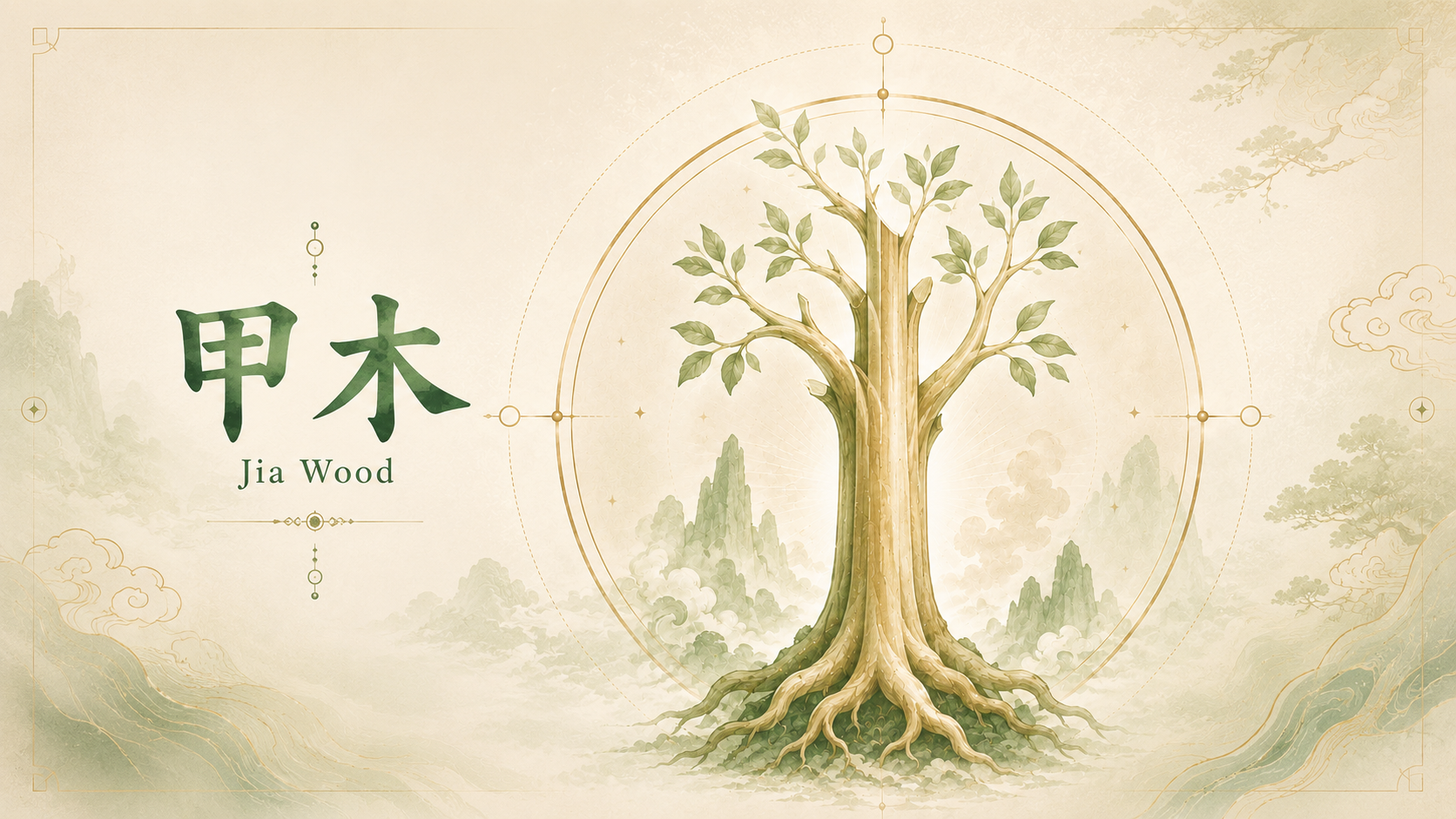
The Expression of Jia Wood in BaZi
Explore the meaning of Jia Wood in BaZi, including its Yang Wood nature, traditional tree imagery, seasonal expression, Five Element relationships, Ten Gods roles, and how Jia Wood changes when it becomes the Day Master.

The Expression of Yi Wood in BaZi
Explore the expression of Yi Wood in BaZi, including its Yin Wood nature, traditional imagery of flowers and vines, seasonal changes, Five Element relationships, Ten Gods roles, and meaning as a Day Master.

The Expression of Bing Fire in BaZi
Explore the expression of Bing Fire in BaZi, including its Yang Fire nature, traditional imagery of the sun and great fire, seasonal changes, Five Element relationships, Ten Gods roles, and meaning as a Day Master.